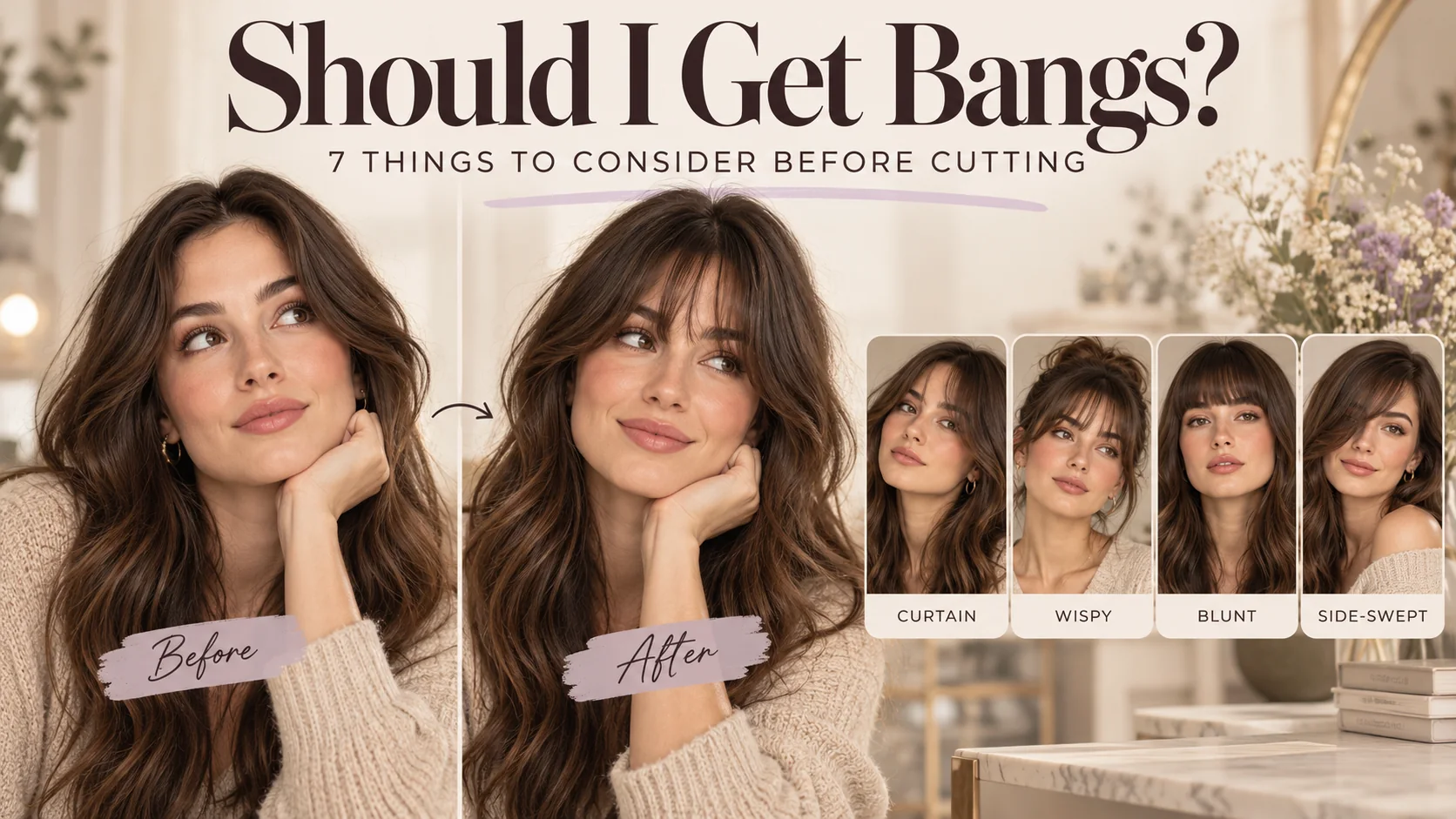
A folder of curtain bangs screenshots can make a new fringe tempting. But those photos may not reflect your cowlick, natural texture, or morning routine. Before booking the cut, ask a few honest questions about your own hair and the upkeep you’re comfortable with.
Key Takeaways
- Get bangs when you love the look and you’re fine with a little daily styling and a trim every few weeks.
- Talk to your stylist first if you have a strong cowlick or want a wash-and-go cut. Give yourself time to adjust before a big event.
- Start longer. Longer curtain or side-swept bangs can give you more room to adjust, and your stylist can cut shorter later.
7 Things to Consider Before Getting Bangs
Bangs can change your whole look while the rest of your hair stays long. Run through these seven questions before you sit in the salon chair.
1. How Will Bangs Frame Your Face?
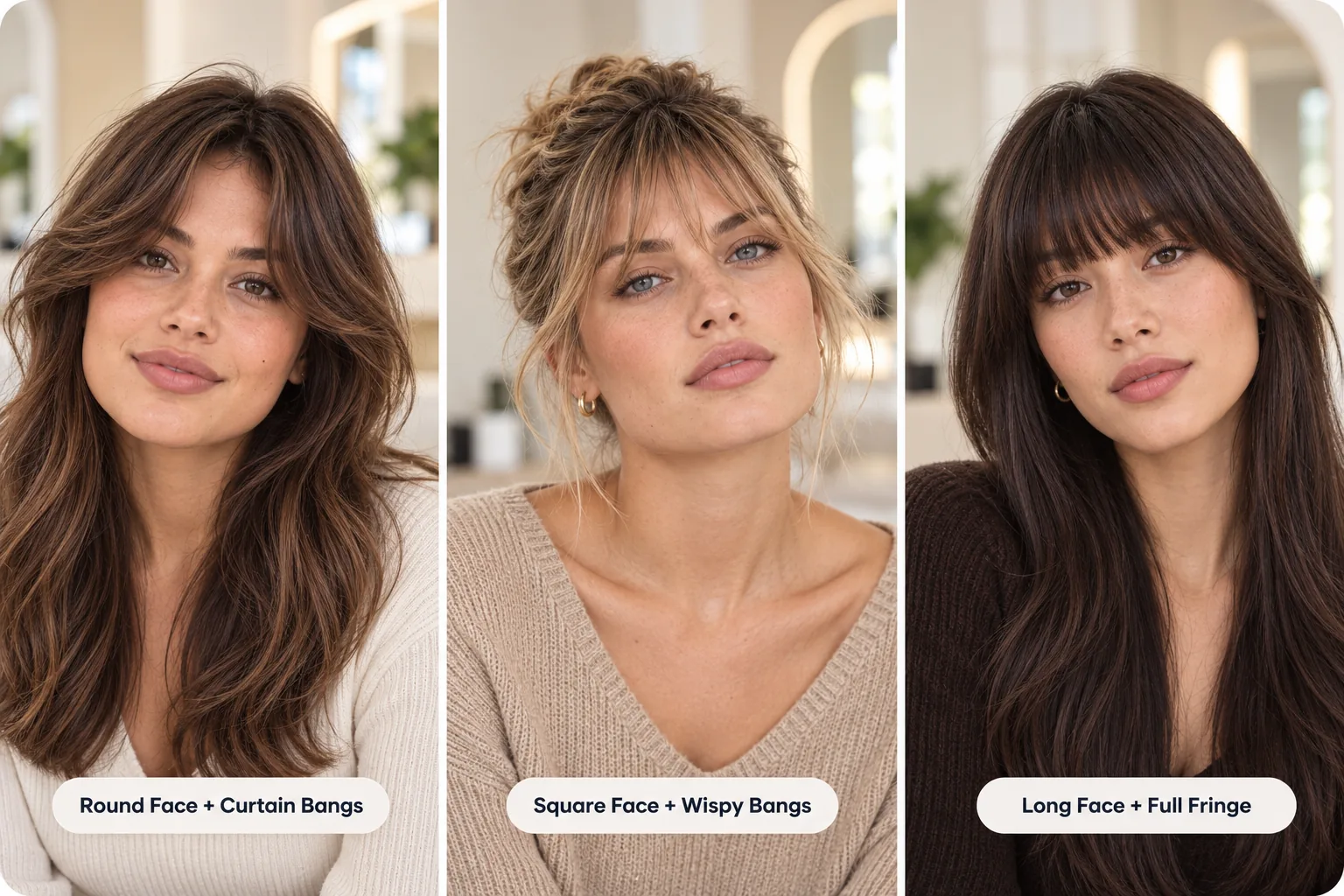
Your face shape guides where a fringe should fall, how wide it should be, and how much forehead it covers. Longer curtain bangs soften fuller cheeks, while wispy bangs add movement around a sharp jawline. These are starting points, not rules, since length, width, and thickness can all be adjusted.
Quick call: A round or full face usually suits longer, parted bangs. A long face or high forehead can carry a fuller, straight-across fringe.
2. What Is Your Natural Hair Texture?
Straight hair shows the cut line clearly. Wavy hair can bend or split around the forehead, and curls spring up as they dry.
With curly hair, ask your stylist to check the length while your hair is dry and natural. Bangs that look perfect when stretched can end up much shorter once the curls settle.
Quick call: Straight and wavy hair can wear almost any fringe. Curly hair works best with a fringe cut dry and left a little longer than you think you need.
3. Do You Have a Cowlick at Your Hairline?
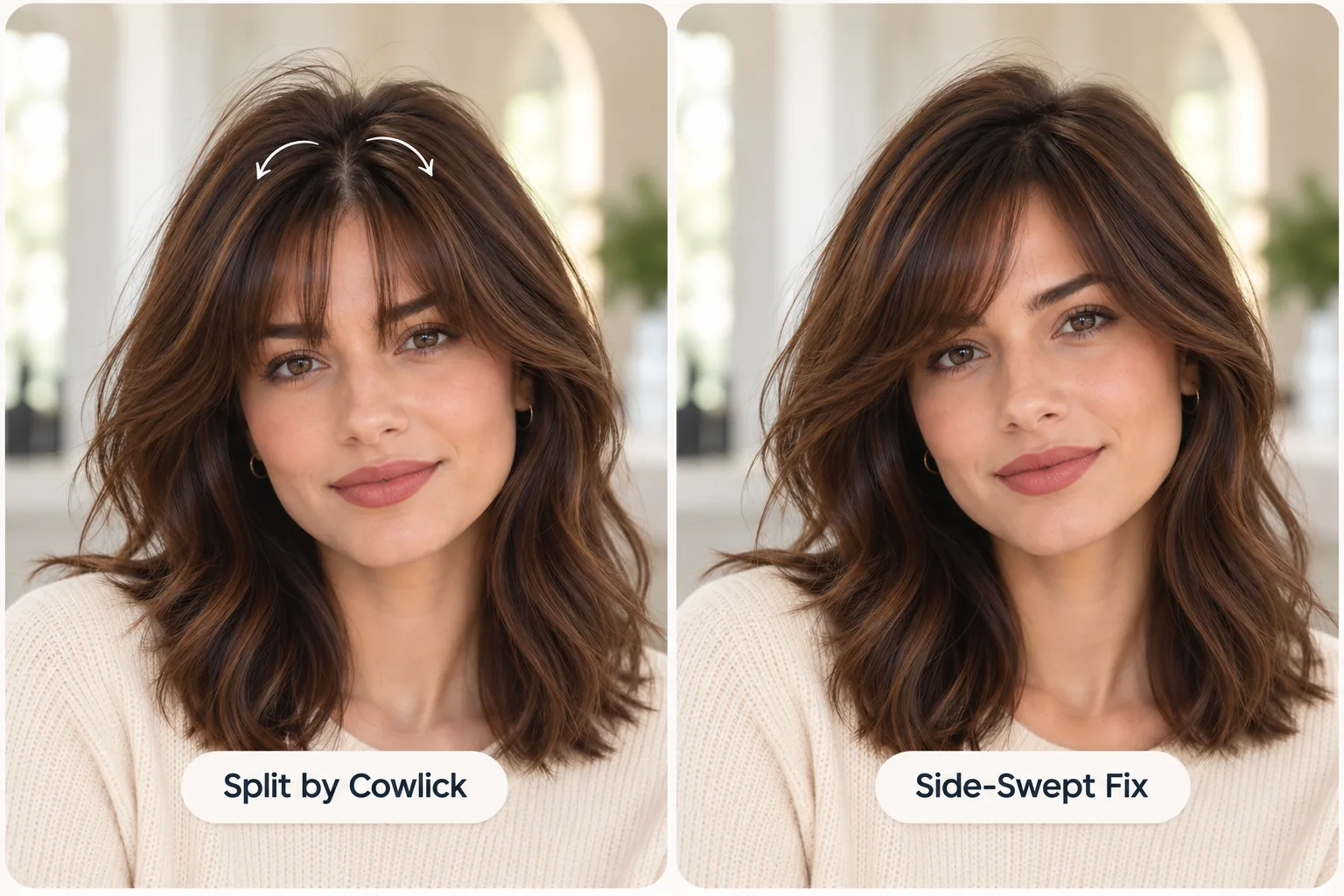
Part your hair where you want the bangs and let it fall on its own. A cowlick can make the front pieces split, lift, or swing to one side. Your stylist can shape the fringe around the growth pattern, although some looks will need more daily styling.
Quick call: A cowlick in the center favors curtain or side-swept bangs. A cowlick off to one side can work with a fringe swept the same way it grows.
4. How Much Time Will You Spend Styling Them?
Picture an ordinary weekday when you’re already running late. Bangs can look different after sleep, a workout, or a humid walk to the office, and many need a quick blow-dry to sit right.
For a wash-and-go routine, longer blended bangs that work with your natural hair are the safer pick.
Quick call: Short on styling time? Ask for a longer fringe that follows your natural texture. Before choosing blunt or micro bangs, check how much daily styling your hair will need.
5. Are You Ready for Regular Trims?
Bangs reach your eyes long before the rest of your haircut needs attention. Blunt bangs often need a trim every three to four weeks to keep their shape, while longer styles give you more time between appointments. Many salons offer quick bang trims, so ask about it when you book.
Quick call: If a salon visit every month sounds like a chore, skip blunt and micro bangs and pick a style that grows into layers.
6. How Will You Grow Them Out?
Even a fringe you love today might feel different six months from now. Hair grows about half an inch a month on average, so short bangs can take several months to blend into face-framing layers. Clips, headbands, and side parts get you through the awkward stage, and starting longer makes the whole process easier.
Quick call: If you might change your mind within a few months, start at cheekbone-grazing curtain bangs instead of an eyebrow-length fringe.
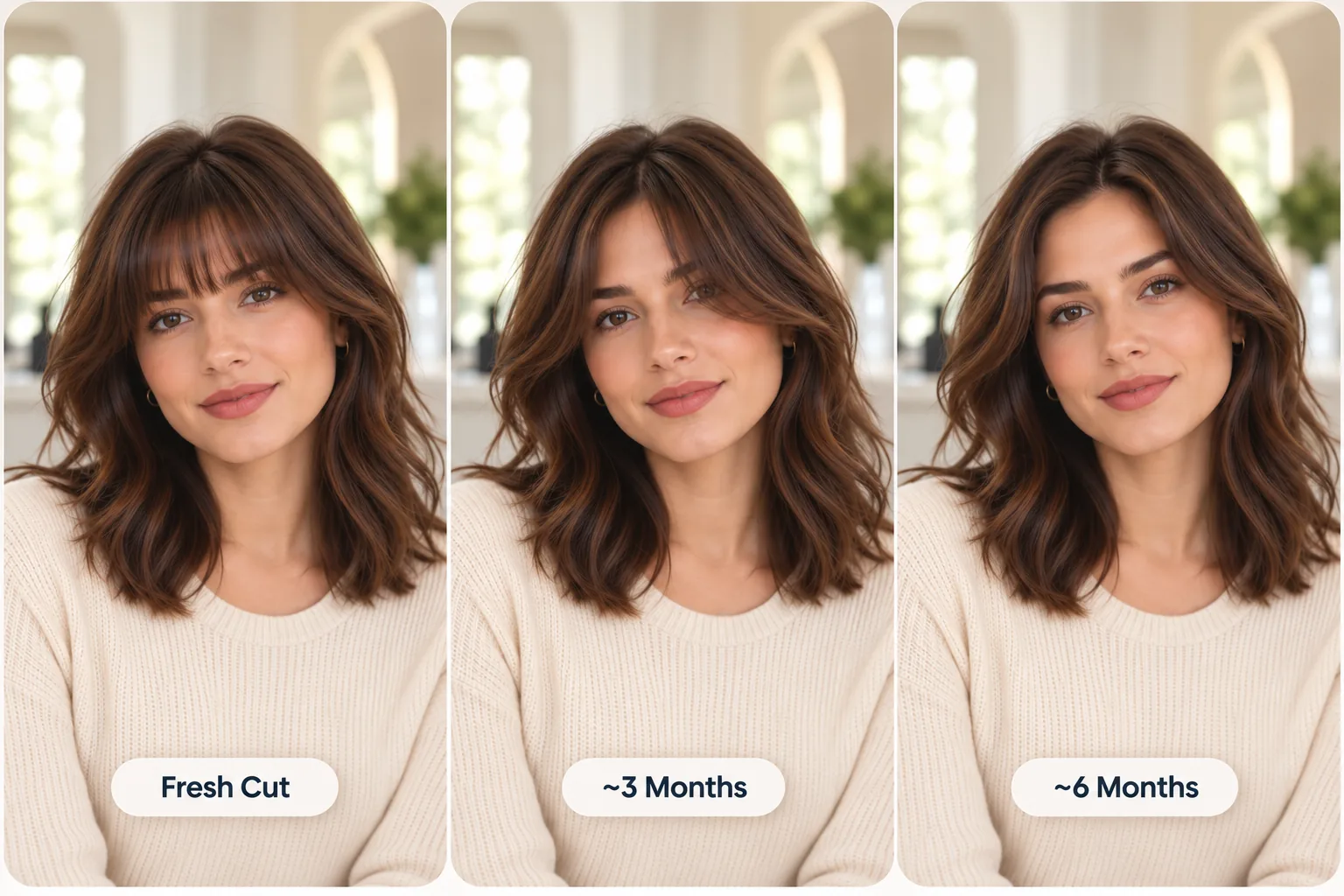
7. Have You Seen the Look on Yourself?
A celebrity haircut gives you inspiration, but your own face, hairline, and texture decide the result. Preview a few fringe styles on your own photo and compare the length, thickness, and shape before you decide what to ask for.
A good first step: Start a little longer. Your stylist can always go shorter once you’ve seen how it falls.
Bangs Readiness Checklist
Tick the statements that fit your routine. Talk through any unchecked items with your stylist before deciding on a cut.
Will You Regret Getting Bangs?
Before cutting bangs, think about how you’ll handle a shorter-than-expected fringe, oily roots, or extra styling. Here are a few frustrations to plan for.
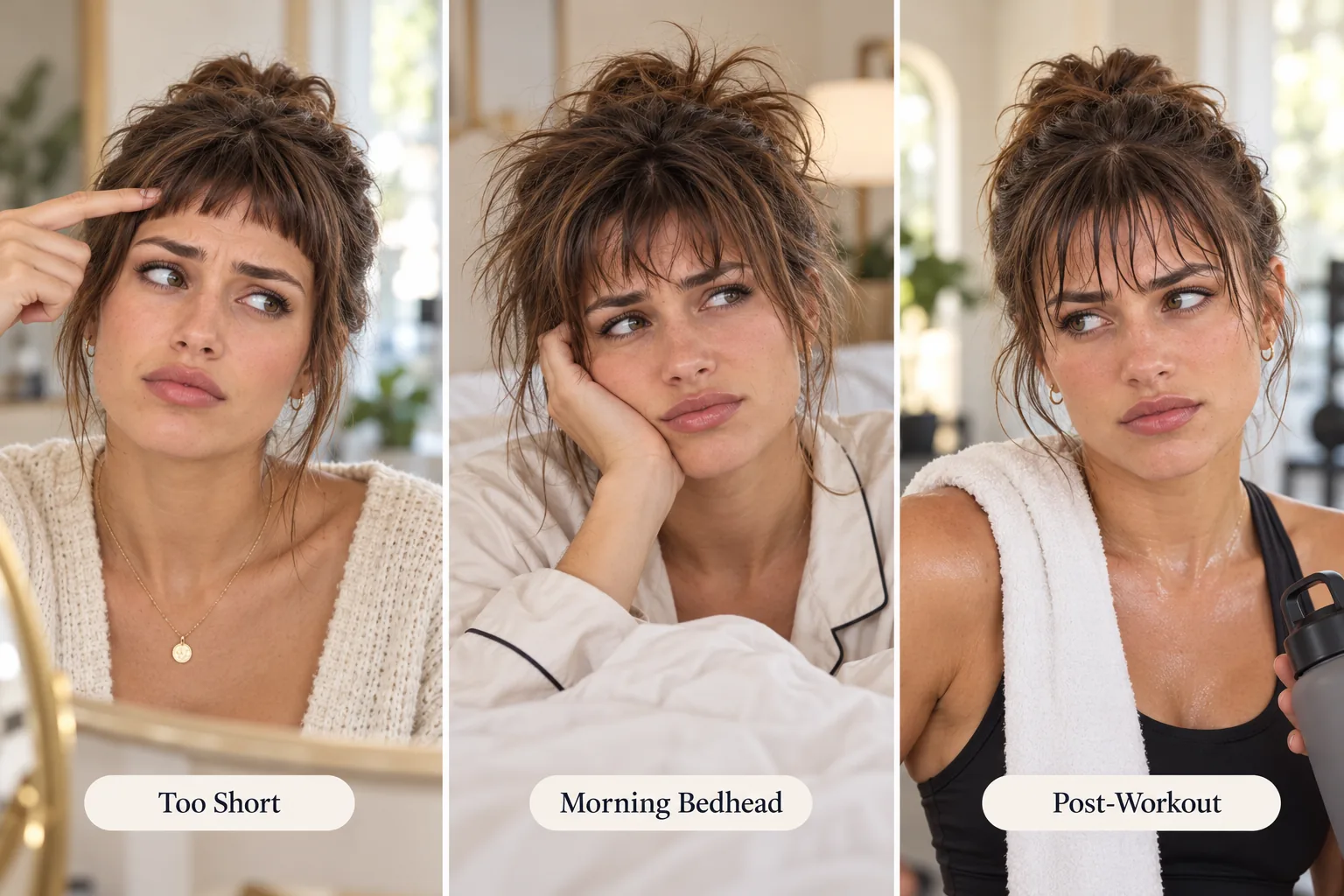
They were cut shorter than expected. Hair is often trimmed wet, and bangs shrink a little as they dry. Ask for the fringe to be cut or checked dry, and start at least a finger’s width longer than your goal.
The salon cut didn’t match the photo. A celebrity reference shows someone else’s hair density and hairline. Bring a preview on your own face, plus a side view, so your stylist sees the length and width you mean.
They get oily or flat by lunchtime. A fringe sits against your forehead all day and picks up oil and sweat from your skin. A little dry shampoo at the roots and keeping skincare off the hairline make a big difference.
You miss wearing your hair back. Bangs stay out even in a ponytail or a bun. If you pull your hair back most days, curtain or side-swept bangs tuck away far more easily than a full fringe.
Hot weather made them annoying. Summer heat and workouts make bangs stick to your forehead. A slim headband or a few pins for the gym keep them out of the way without hiding the cut.
Starting longer and choosing a style that fits your routine can help you avoid some of these surprises.
Bangs or No Bangs? Compare Them on Your Own Face
The fastest way to settle “bangs or no bangs” is to see both versions of you side by side. Without bangs, your forehead and natural hairline stay visible. With bangs, the front pieces change how your hair frames your eyes, brows, and cheeks.
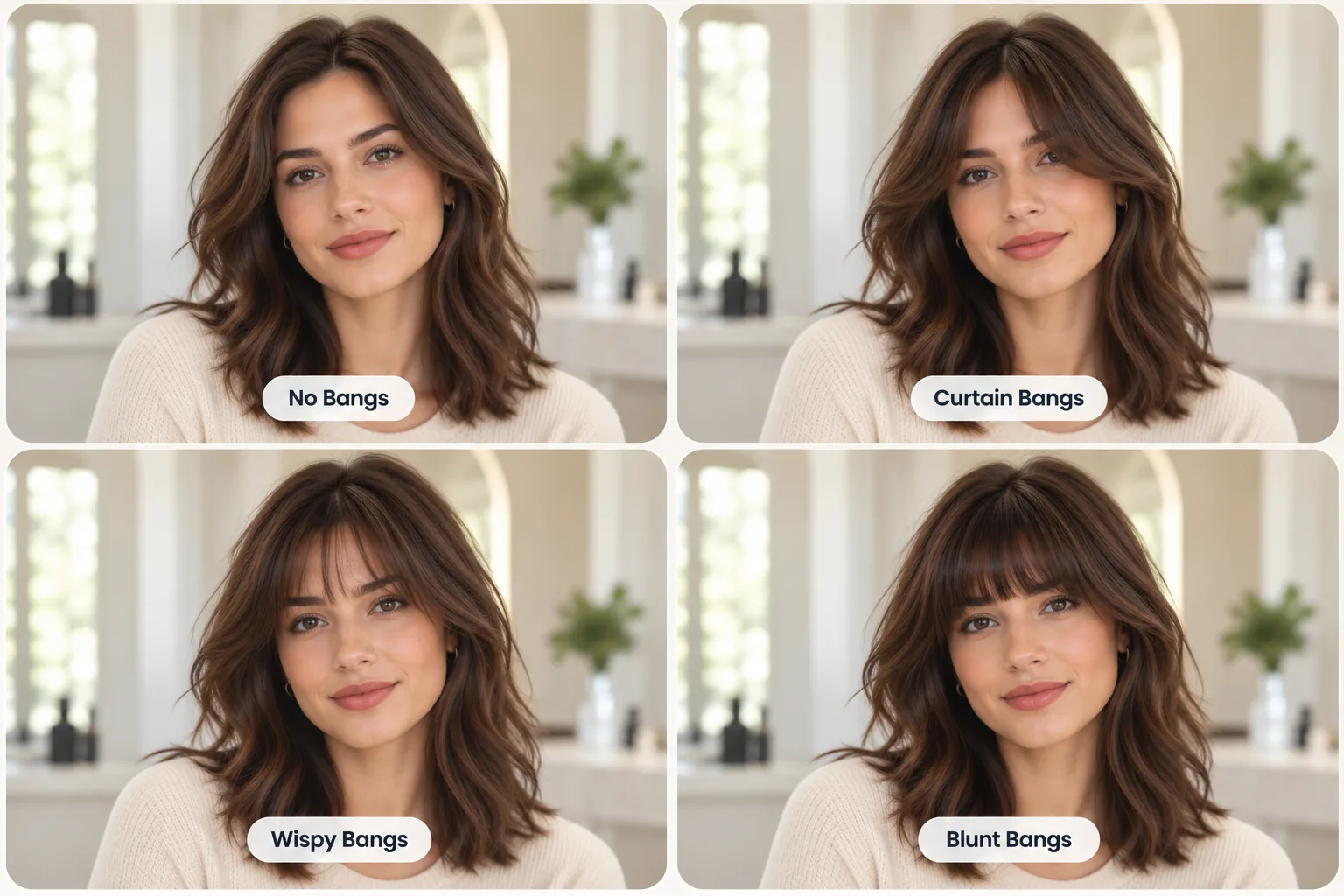
When you compare, look at three things:
- Forehead coverage: Do you prefer an open forehead, a light fringe, or a full one?
- Overall shape: Do the bangs work with your hair’s length and volume?
- Everyday style: Can you picture them with your usual makeup, glasses, and clothes?
Line up your favorite previews in the AI collage generator to see the differences at a glance, or send the grid to friends for a vote.
Pick the look you’d be comfortable wearing on an ordinary Tuesday, not just in a perfectly styled photo.
How to Try Bangs Without Cutting Your Hair
Two simple options let you test a fringe before booking the salon. Clip-in bangs let you feel hair across your forehead in person, although the fit and texture won’t match a real cut. An AI bangs preview shows different fringe shapes on your actual face, using one selfie.
The AI photo editor lets you edit an uploaded photo with a text prompt. Describe the fringe you want to preview, then compare each result with your original photo, since AI edits may also change facial details or other parts of your hair.
Step 1: Upload a clear selfie
Pick a front-facing photo with your forehead and hairline visible in even light. Blurry or dark selfies sharpen up in the image enhancer before you upload.
Step 2: Choose your bangs
Describe the fringe you want in a sentence or two. Here’s a prompt you can copy:
“Use my uploaded photo. Keep my face, skin tone, expression, hair length, hair color, clothing, background, and lighting the same. Add soft curtain bangs with a natural center part and airy strands framing my cheekbones. Change only the bangs.”
Swap “soft curtain bangs” for wispy, blunt, or side-swept to see other looks.
Step 3: Compare and download
Generate a few versions from the same photo, then compare the length, thickness, and forehead coverage. Download your favorite without a watermark and bring it to your stylist as a reference.
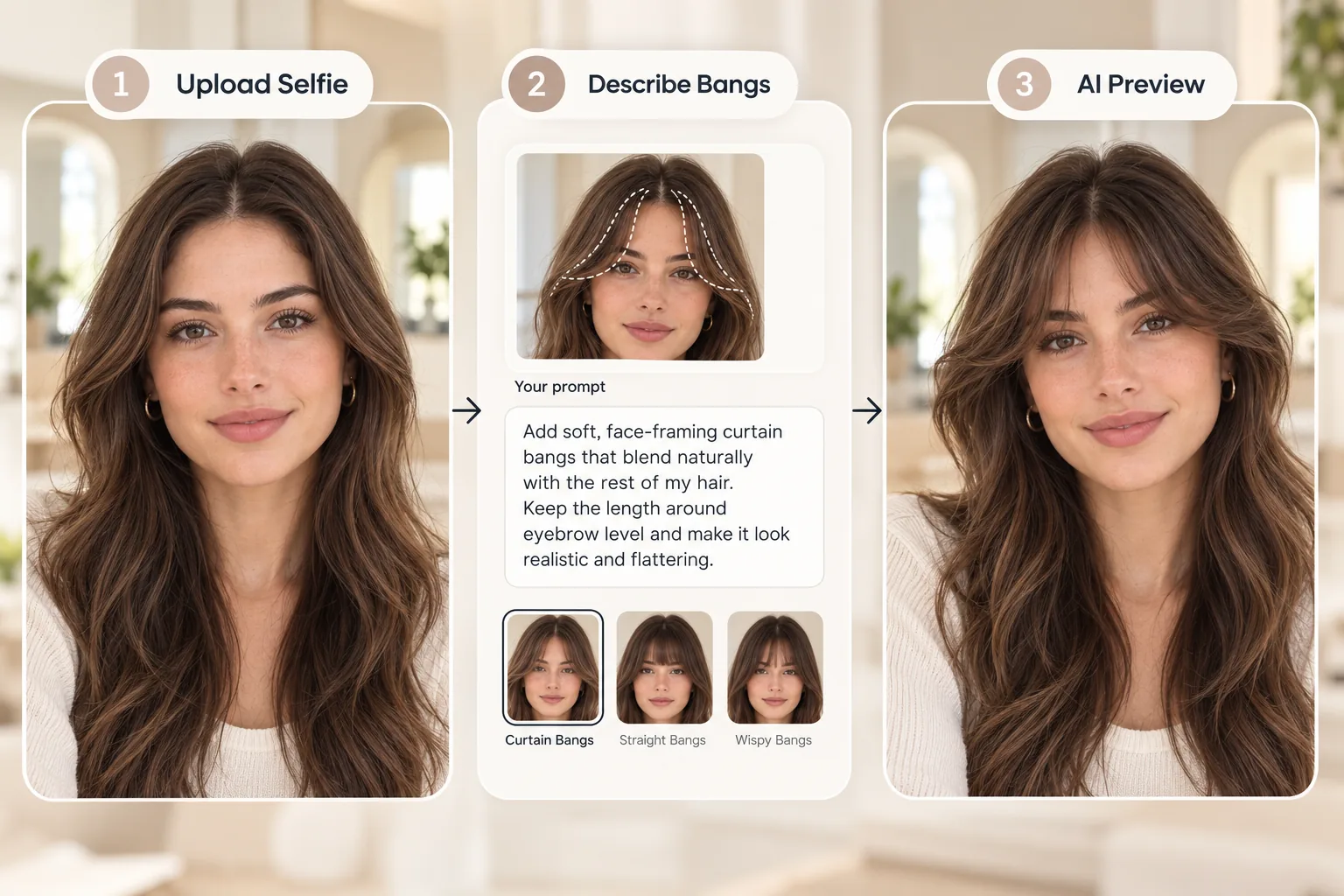
AI previews help you compare looks visually. Your real result also depends on your hair’s growth pattern, density, texture, and how your stylist cuts it.
What to Ask Your Stylist Before Cutting Bangs
Bring a reference photo that shows the front and sides of the fringe. A preview on your own face makes the look even clearer.
- Will this work with my natural texture? Ask how the fringe will fall when it air-dries.
- Does my hairline affect the cut? Talk through cowlicks, strong parts, and growth direction.
- Can we start a little longer? Leave room to adjust before going shorter.
- How should I style it at home? Ask for a quick demo with tools you already own.
- How often will I need a trim? Find out when to come back.
Book your first fringe at least a few weeks before a wedding, vacation, or any big event, so you have time to get used to it.

PhotoGrid
A fringe can be a fun change, and the best one fits your natural hair and your real routine. Think through the styling, trims, and grow-out first, then start a little longer and see your favorite styles on your own face before the scissors come out.
FAQ
Do bangs make you look younger?
Bangs can make you look younger by softening forehead lines and drawing attention to your eyes. Soft, longer styles like curtain or wispy bangs usually give the most natural effect, while a heavy blunt fringe reads more as a bold style choice.
Should I get curtain bangs?
Longer curtain bangs can be a practical first fringe because they blend into face-framing layers as they grow. The styling they need will depend on your texture and hairline, and you may need to blow-dry them to hold their curve.
Can I wear bangs with glasses?
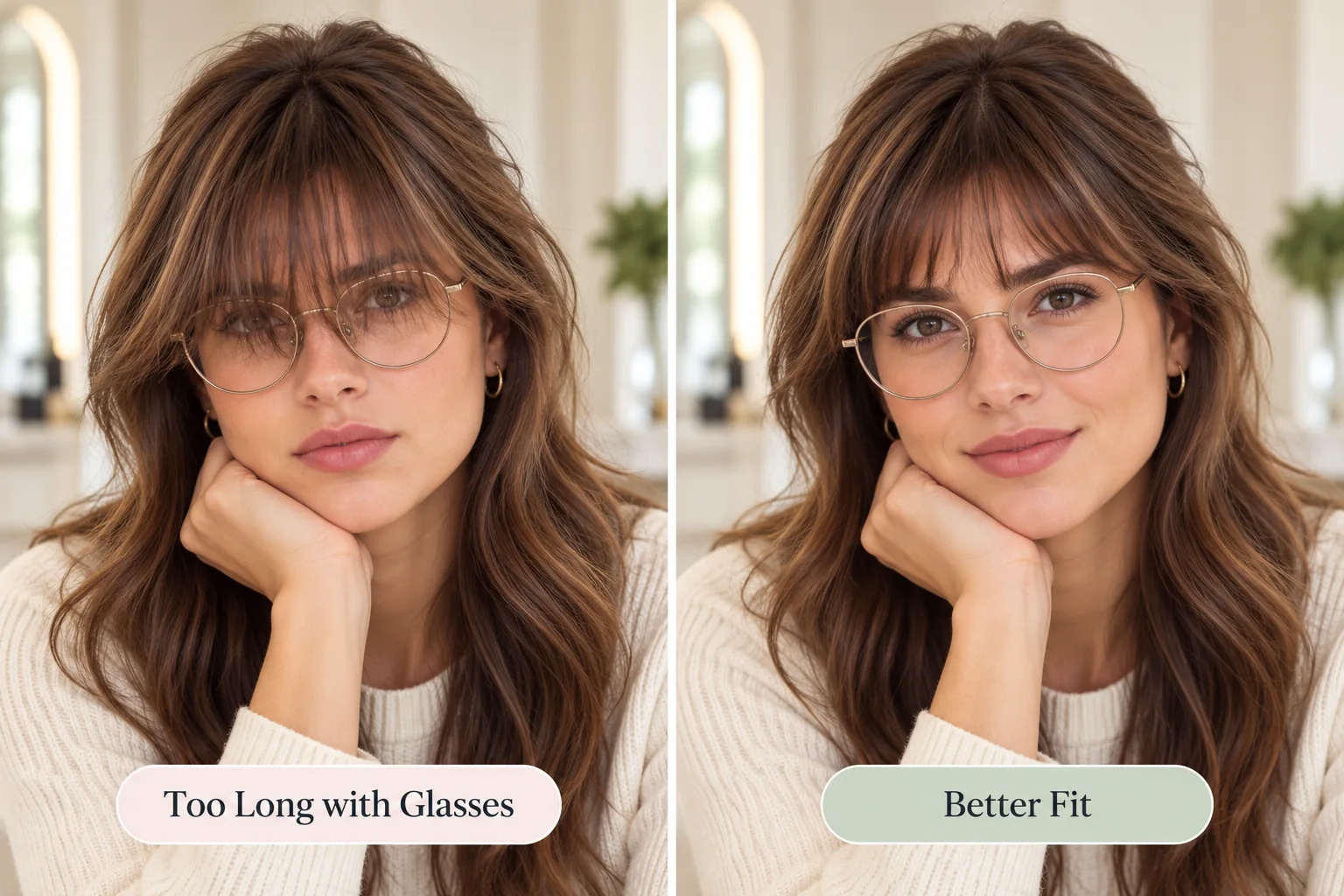
Bangs can work well with glasses when the length and shape leave your eyes clear. Bring your glasses to the appointment so your stylist can check where the fringe falls and whether it catches on the frames.
Are bangs a bad idea for low-maintenance hair?
Bangs add a step to most morning routines, but they aren’t automatically high-maintenance. Longer curtain or side-swept bangs blend in and forgive a skipped blow-dry, while blunt and micro bangs need more frequent styling and trims.
Can I see what I’d look like with bangs before cutting?
You can preview bangs on your own selfie before you cut anything. Upload a photo to the PhotoGrid AI photo editor, describe a fringe, and compare the result with your original photo.